Character & Citizenship Education
Character & Citizenship Education
Aim
CCE provides an integrated approach to addressing our students' development of values, character, social-emotional well-being, and citizenship dispositions in a coherent and holistic way.
The key aims of the CCE curriculum are as follows:
1. Prepare Students for Citizenship
-
Character development is citizenship in action.
-
Good habits of mind and heart, compatible with civic responsibilities, are necessary for good citizenship to thrive.
-
Develop the habit of thinking and reflecting for the purpose of common good.
2. Develop Leaders with Compassion for Service
-
Uphold belief that every student can be a servant leader
-
Empower students to be a positive influence to others
3. Adopt a Future-Oriented Focus
-
Prepare and equip students for the workforce and future living.
-
Emphasise building strength of character.
Character & Citizenship Education Department
|
Head of Department |
Mr Damien Joash Poon |
|---|---|
|
Subject Head |
Ms Siti Aisyah |
CCE Curriculum
CCE includes areas such as Educational Career Guidance, Sexuality Education, Cyberwellness, National Education, Mental Health, Family Education, and other Values-Related experiences.
Supporting the curriculum are the teachers and appointed class leaders such as the Peer Support Leaders, National Education Ambassadors and Cyberwellness ambassadors.
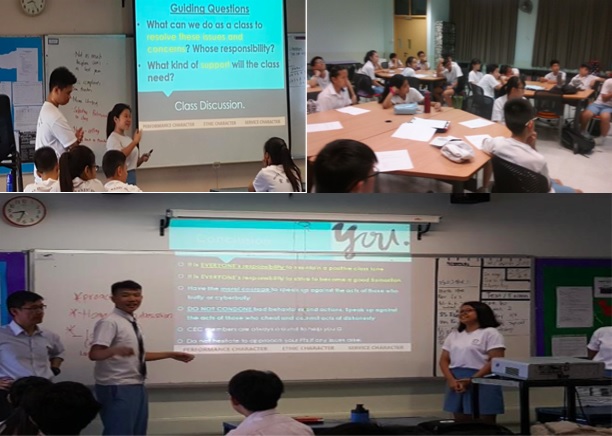
Students receiving training, and leading values-based class discussions on various issues
Education and Career Guidance
The ECG experience aims to equip students to remain competitive in the global economy and to lead meaningful and productive lives in continual service towards God and society, notably by having a moral and good work ethic, and performing to the best of one’s ability. HIHS seeks to nurture students who can make decisions guided by school values.
The HIHS ECG curriculum includes sharing sessions by industry practitioners and post-secondary educational institutions; work experiences/attachments with industry partners; learning journeys to various industries, ECG MOE and school-based lessons, and counselling.
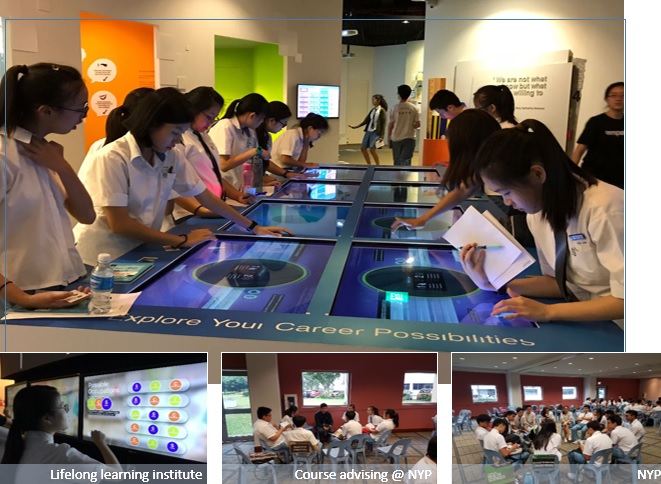
Exploring career options @ Lifelong learning insitute
Cyberwellness
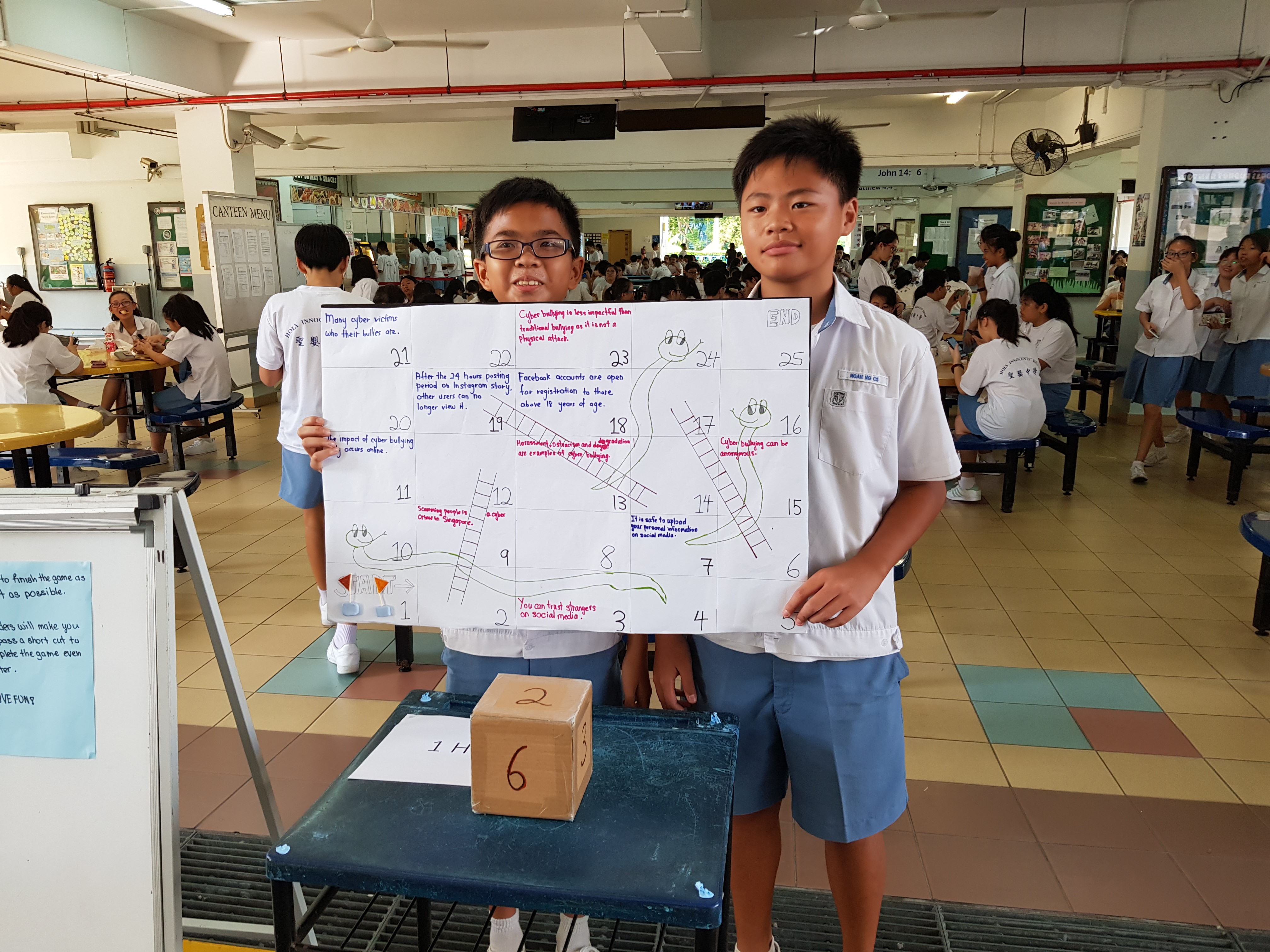
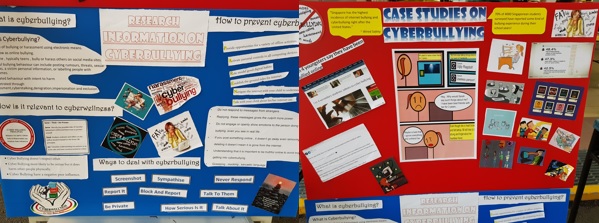
The Cyberwellness programmes aims to guide students to take responsibility for their own well-being in cyberspace. The three principles, ‘Respect for Self and Others’, ‘Safe and Responsible Use’ and ‘Positive Peer Influence’ when adhered to will help our students to make careful and well-considered decisions in cyberspace.
The Cyberwellness curriculum includes lessons and learning experiences, such as: roadshows and assembly programmes on cyber well-being, a Cyberwellness advocacy movement by students, and customised training to equip our students with the necessary skills to adopt healthy cyber habits.
Cyberwellness Advocacy
National Education
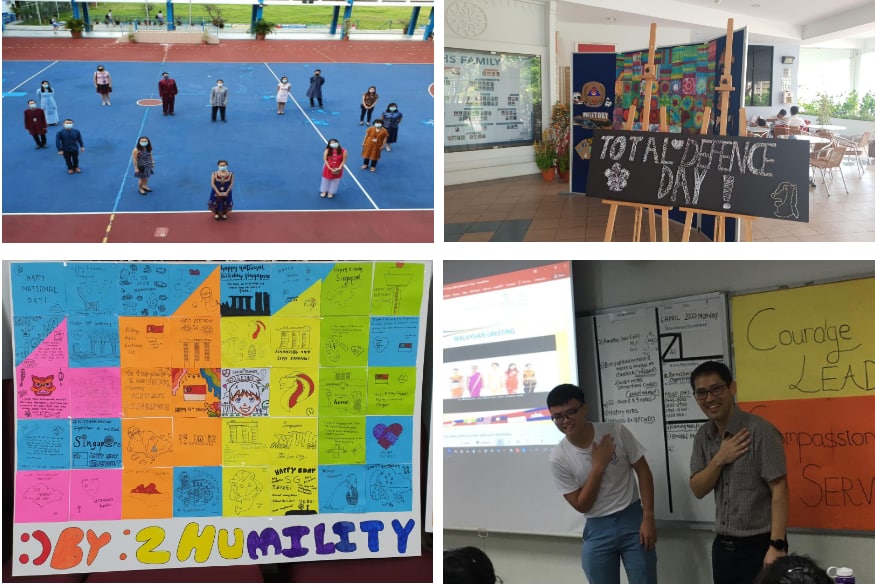
NE plays an important role in developing students' understanding of Singapore and their national identity. Besides commemorating the four NE events (Total Defence Day, International Friendship Day, Racial Harmony Day, and National Day), students have opportunities to learn about various cultures and religions through learning journeys, assembly programmes, and customised activities held as part of the regular CCE curriculum. In the process, they will also have the chance to deepen their understanding of their role as active citizens in Singapore.
Values in Action (VIA)
Through Values in Action (VIA), students learn to look beyond themselves, put their values into practice, and take ownership of contributing meaningfully to the community. Guided by the Good Samaritan Ethos, the HIHS VIA programme follows a spiral progression: students revisit and deepen their understanding of service-learning as they progress from serving the school community in Lower Secondary to engaging with the wider community in Upper Secondary. Through CCE lessons, students learn about the key elements of service-learning and initiate projects that respond to the needs of their beneficiaries. In the process, they develop greater self-awareness, empathy, and leadership.
Lower Secondary VIA
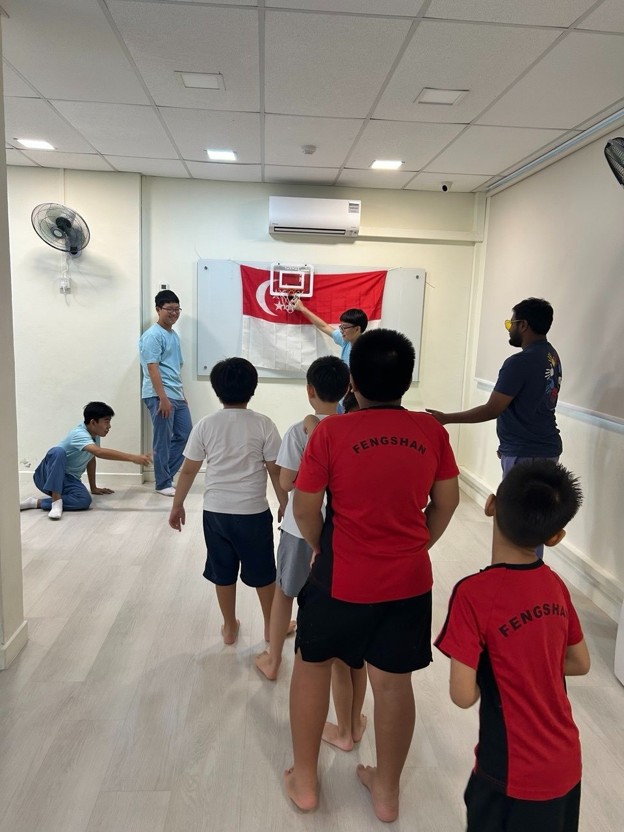
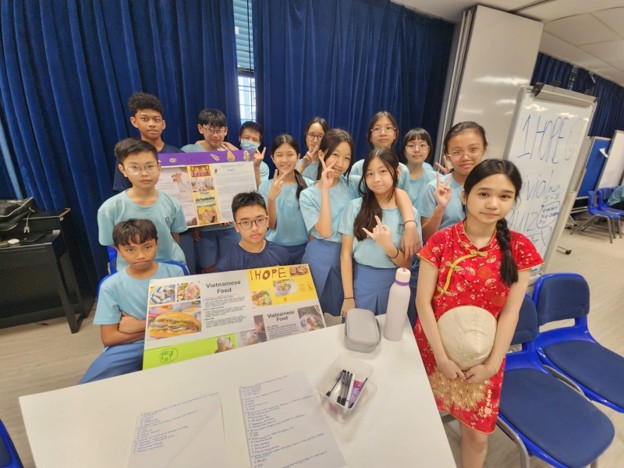
Secondary 1 service-learning supports the National Education emphasis on racial harmony. Secondary 1 classes set up booths that showcase games and advocacy activities centered on racial harmony, with students of other levels as their audience. In the process, they grow in their understanding of how they can be agents of positive change in the school community. They learn to exemplify the school values of love and respect, promoting understanding and mutual respect among their peers.
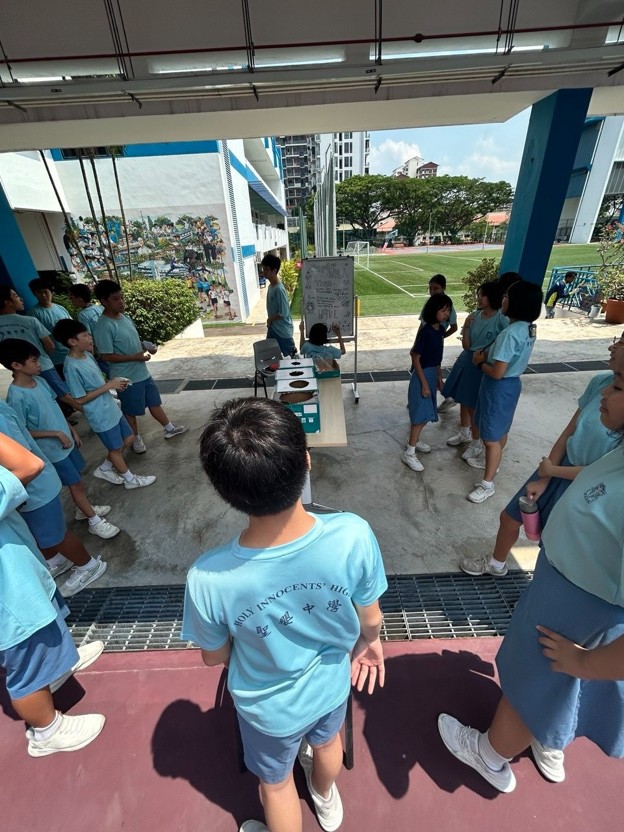
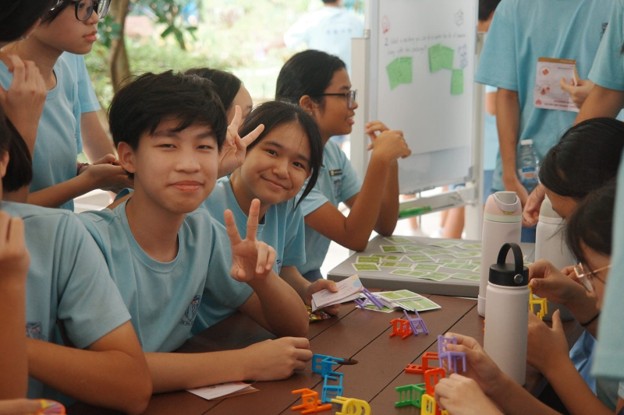
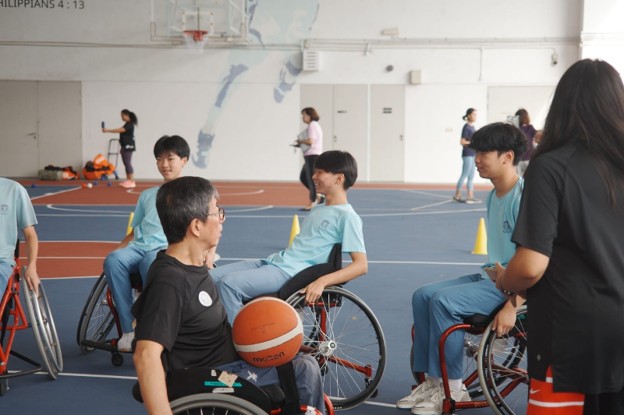
Secondary 2 students contribute to a culture of inclusivity, empathy, and understanding within the school community. In CCE lessons, they learn about different special needs, reflect on the importance of empathy, and plan for booths featuring games and advocacy activities on Be Inclusive day (a school-wide event organised by the SEN and Service-Learning team). Through these projects, students promote inclusion in the community, and advance the school’s values of love and respect.
Upper Secondary VIA
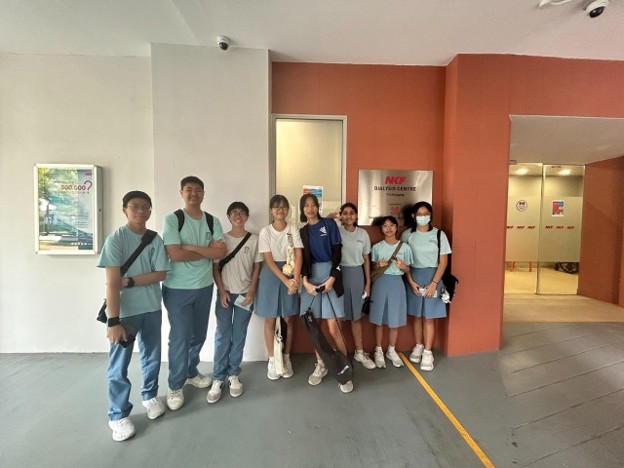
As HIHS students progress to Upper Secondary, they are invited to look beyond their school community and to serve the wider community. HIHS collaborates with Caritas Singapore, Morning Star, and the National Kidney Foundation to serve their beneficiaries. Through these meaningful collaborations, students further develop empathy as they design and facilitate activities suited to beneficiaries’ needs and interests. This experience broadens their perspective of social needs and community partnerships. It also allows them to develop compassion and a belief that they can make a difference in society. As far as possible, each class serves the same community partner over two years. This enables students to build deeper relationships and to apply learning from their first year as they refine their service-learning project in the second.